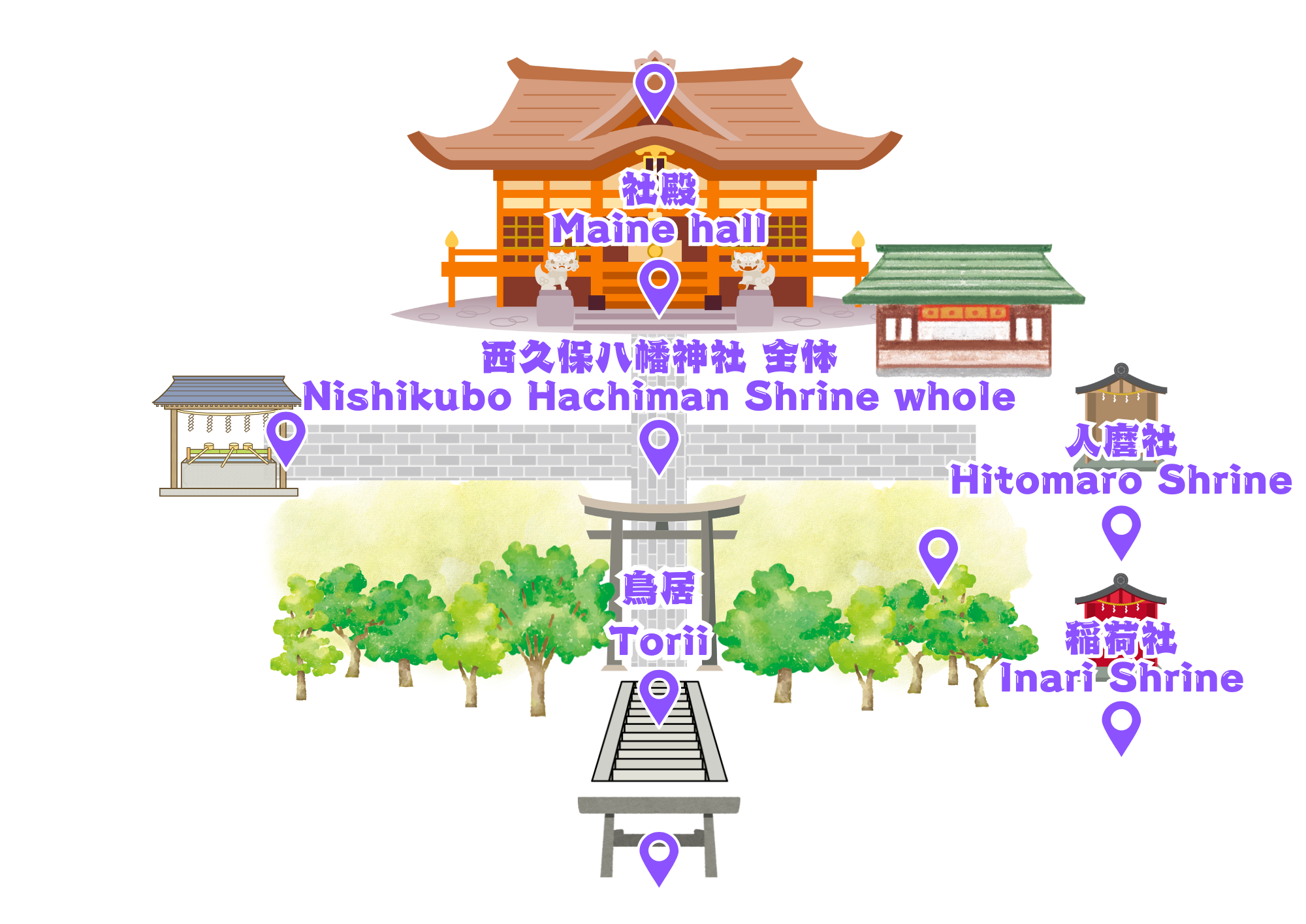
The map icon is a VR 360-degree image!
●For PC users
Touch the icon for the location you want to view →
It’s like you’ve been warped there! You can view in 360°♪
+For VR headset users
Touch the square icon in the upper right →
Enjoy in VR mode!
● For smartphone users
Touch the icon of the location you want to display →
A message will appear on the screen saying “This immersive website requires access to your device’s motion sensors.” Select “Allow” →
A message will appear saying “We’re requesting access to your motion and orientation.” Select “Allow” →
It’ll be like you’ve been transported there! Enjoy a 360° view!
地図のアイコンは、VR360度画像になっています!
●パソコンの方
表示したい場所のアイコンをタッチ→
そこにワープしたかの様に!360°ご覧になれます♪
+VRヘッドセットの方
右上の四角いアイコンをタッチ→VRモードでお楽しみいただけます!
●スマートフォンの方
表示したい場所のアイコンをタッチ→
This immersive website requires access to your device motion sensors.(この没入型ウェブサイトは、デバイスのモーションセンサーへのアクセスが必要です)と画面に出るので、Allow(許可)を選択→
“動作と方向“へのアクセスを求めています を、許可を選択→
そこにワープしたかの様に!360°ご覧になれます♪
Nishikubo Hachiman Shrine
During the Heian period, from the end of the 8th century to the end of the 12th century, Japanese politics was centered around Kyoto aristocrats known as kuge, but this was also a time when a group of people based in the provinces known as “samurai” gradually gained power.
After the Taira no Masakado Rebellion broke out in Kanto in 942, the Imperial Court was forced to rely on the samurai to suppress local rebellions.
In the Kanto region, Minamoto no Yorinobu, a descendant of Emperor Seiwa and appointed governor of Kozuke, steadily established himself as a samurai leader, and put down the Taira no Tadatsune Rebellion that broke out in 1028, thereby increasing the prestige of the Minamoto clan in the Kanto region.
Nishikubo Hachiman Shrine was founded by Minamoto no Yorinobu in the Kasumigaseki area during the Kanko era (1004-1012).
Hachiman Shrine is the clan deity of the Minamoto clan, the guardian deity of samurai, and the god of war.
It is said that this shrine was later moved to its current location in Iikura by the famous general Ota Dokan during the Muromachi period from the 14th to 16th centuries, when samurai rule was firmly established.(Also known as Iikura Hachiman)
西久保八幡神社
平安時代と呼ばれた、8世紀末~12世紀末、我が国の政治は、公家と呼ばれる京都の貴族中心に行われていましたが、その時代は地方に根を張る「武士」と呼ばれる集団が次第に力をつけてくる時代でもありました。
天慶5年(942年)に関東で発生した平将門の乱以降、朝廷が地方の反乱を鎮圧するためには武士を力を借りざるを得なくなります。
関東地方では、清和天皇の子孫で上野守に就任した源頼信が武士のリーダーとして着々と地歩を築き、万寿5年(1028年)に発生した平忠常の乱を平定し、関東における源氏の名声を高めます。
この西久保八幡神社は、寛弘年間(1004-1012年)、源頼信により霞が関のあたりに創建されました。
八幡神社は、源氏の氏神であり、武士の守り神、戦いの神様です。
この神社は、その後、武士の支配が確立した14世紀~16世紀の室町時代、名将と謳われた太田道灌により、飯倉の現在地に遷されたと伝わっています。(別名 飯倉八幡)
コメントを残す