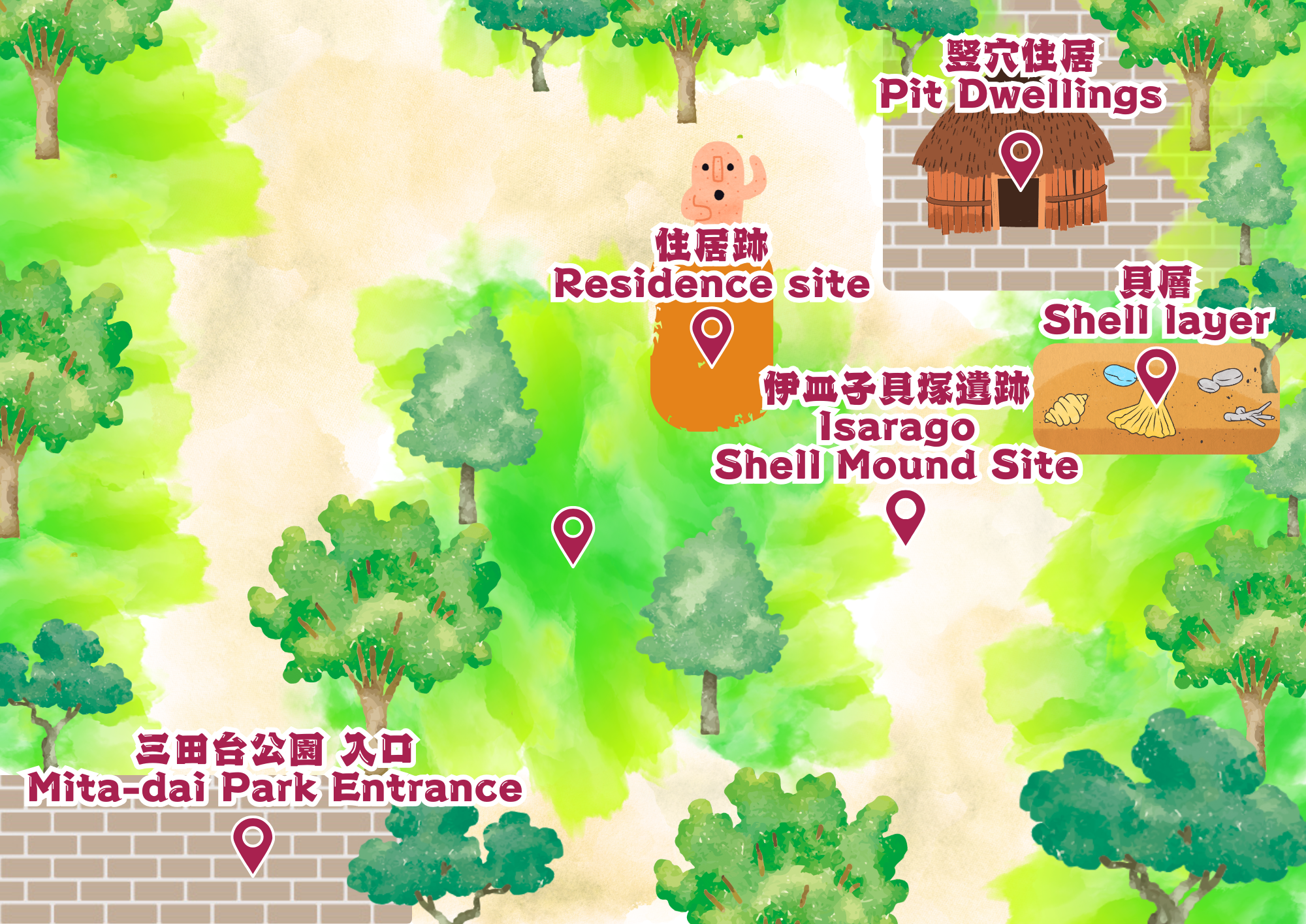
The map icon is a VR 360-degree image!
●For PC users
Touch the icon for the location you want to view →
It’s like you’ve been warped there! You can view in 360°♪
+For VR headset users
Touch the square icon in the upper right →
Enjoy in VR mode!
● For smartphone users
Touch the icon of the location you want to display →
A message will appear on the screen saying “This immersive website requires access to your device’s motion sensors.” Select “Allow” →
A message will appear saying “We’re requesting access to your motion and orientation.” Select “Allow” →
It’ll be like you’ve been transported there! Enjoy a 360° view!
地図のアイコンは、VR360度画像になっています!
●パソコンの方
表示したい場所のアイコンをタッチ→
そこにワープしたかの様に!360°ご覧になれます♪
+VRヘッドセットの方
右上の四角いアイコンをタッチ→
VRモードでお楽しみいただけます!
●スマートフォンの方
表示したい場所のアイコンをタッチ→
This immersive website requires access to your device motion sensors.(この没入型ウェブサイトは、デバイスのモーションセンサーへのアクセスが必要です)と画面に出るので、Allow(許可)を選択→
“動作と方向“へのアクセスを求めています を、許可を選択→
そこにワープしたかの様に!360°ご覧になれます♪

↑The QR code above features an AR pop-up effect!
①Turn on your smartphone camera and point it at the QR code above (enable location access in Settings beforehand).
②Select Allow, OK, and Close.
③Something will appear in the space♪Check it out in 360°!
↑上記のQRコードは、ARが飛び出る仕掛けになっています♪
①スマートフォンのカメラを起動、上記QRコードにかざす(事前に設定で位置情報をONにする)
②許可、OK、閉じる を選択
③空間に何かが出ます♪360°見てね!
IsaragoShell Mound Site
It is said that people first inhabited Japan during the Paleolithic period, 30,000 to 40,000 years ago.
At that time, people moved from place to place, following wild animals, but around 10,000 or so years BC, due to the warming of the climate and the resulting changes in vegetation, people began to settle down and practiced primitive agriculture in addition to hunting and gathering (Jomon period), before eventually shifting to a lifestyle centered on wet rice cultivation (Yayoi period).
The Jomon and Yayoi periods correspond to the period known as the Neolithic Age in international period classification.
During the Yayoi period, people moved from living in families to living in villages, which led to disparities between rich and poor and conflicts between villages. As a result, small nations called kuni were born, which eventually merged into larger countries and powerful clans were formed.(Although there was no written language at the time, there are descriptions in old Chinese books that suggest exchanges with “Wakoku”).
Eventually, the Yamato Court (Yamato Kingdom) was formed in the Kinki region to unite these powerful clans, and Japan embarked on the path to becoming a unified nation.
During the Yayoi period, “square moated tombs” were built, in which wooden coffins were buried in square burial mounds with ditches dug around them. However, between the 3rd and 6th centuries AD, “keyhole-shaped tombs,” which combined circular and square shapes, began to be built in various regions, and are thought to have been permitted by the Yamato Court to be built by local powerful clans. This period is known as the “Kofun period.”
The period after that, when rule was centered in Asuka, Nara Prefecture, is known as the Asuka period.
In the 8th century, the Nara period began, with the capital Heijokyo located in what is now Nara City, Nara Prefecture, and the Tenpyo culture, centered around the emperor and aristocrats, flourished.
At the end of the 8th century, the capital was moved to Heian-kyo in Kyoto, and the period from then until the end of the 12th century is called the “Heian period.” Since then, Kyoto was the political center of Japan for a very long time, and the aristocracy played a central role in this.
From the latter half of the Heian period, groups known as “samurai,” who were armed to maintain public order while protecting their respective territories, began to gain power over the eras. These periods saw the Kamakura period from around the end of the 12th century, the Muromachi period from the early 14th century, the Azuchi-Momoyama period, and the Edo period, and continued to play a central role in politics until the end of the 19th century.
The Isarago Shell Mound Site is a site where remains and artifacts from the Jomon to Edo periods have been discovered in layers. Excavations conducted since 1978 have uncovered the remains of dwellings from the late Jomon period, square moated tombs from the middle of the Yayoi period, remains of dwellings from the Kofun period, and dwellings from the Nara and Heian periods, along with over 12,000 artifacts.
伊皿子貝塚
我が国には、三万年~四万年前の旧石器時代から人が住み始めたと言われています。
当時の人々は野生動物を追って住居を移動する生活を送っていましたが、紀元前1万数千年頃になると、気候の温暖化やそれに伴う植生の変化もあり、人々は定住を始め狩猟採取に加え原始的な農業を行う生活を送るようになり(縄文時代)、やがて、水稲耕作を中心にした生活へと変化して行きます(弥生時代)。
なお、縄文時代と弥生時代は、国際的な時代区分では「新石器時代」と呼ばれる時代に該当します。
弥生時代にはそれまでの家族単位の生活からムラでの生活となりましたが、それにより貧富の差やムラ同士の争いも生じるようになりました。その結果、クニと呼ばれる小国家が誕生し、それがやがて大きな国に統合されて豪族が形成されて行きました(文字は、まだありませんでしたが、中国の古い書物に「倭国」との交流を伺わせる記述がされています)。
やがて、これらの豪族を束ねる大和朝廷(ヤマト王権)が近畿地方に形成され、我が国は統一国家への道を歩みます。
弥生時代には、木棺を方形の墳丘で埋め、周囲に溝を掘る「方形周溝墓」が作られるようになりましたが、紀元3世紀~6世紀頃、各地で円形と方形を組み合わせた「前方後円墳」が作られるようになり、大和朝廷が各地の豪族に許可したものと考えられております。この時代は「古墳時代」と呼ばれています。
その後、奈良県の飛鳥を中心に統治が行われていた時代が「飛鳥時代」と呼ばれます。
8世紀になると、現在の奈良県奈良市に都「平城京」を置く「奈良時代」となり、天皇・貴族を中心とした「天平文化」が花開きます。
8世紀末に、都は京都の平安京に移され、そこから12世紀末までの時代は、「平安時代」と呼ばれました。以来、とても長い間、京都が日本の政治の中心となり、貴族がその中心的役割を担いました。
平安時代の後半からは、各地の領地を守りながら、治安維持のため武装した「武士」と呼ばれる集団が時代に力を持つようになり、12世紀末頃からの「鎌倉時代」、14世紀初期からの「室町時代」それに続く、「安土桃山時代」、「江戸時代」と、19世紀末まで、政治の中心的役割を担う時代が続きました。
こちらの伊皿子貝塚遺跡は、縄文時代から江戸時代に至る遺構・遺物が重層的に発見された遺跡。昭和53年(1978年)からの発掘調査で、縄文時代後期の住居跡、弥生時代中期の方形周溝墓、古墳時代の住居跡、奈良・平安時代の住居が発見され、それに伴う1万2000点を超える遺物が出土しました。
コメントを残す