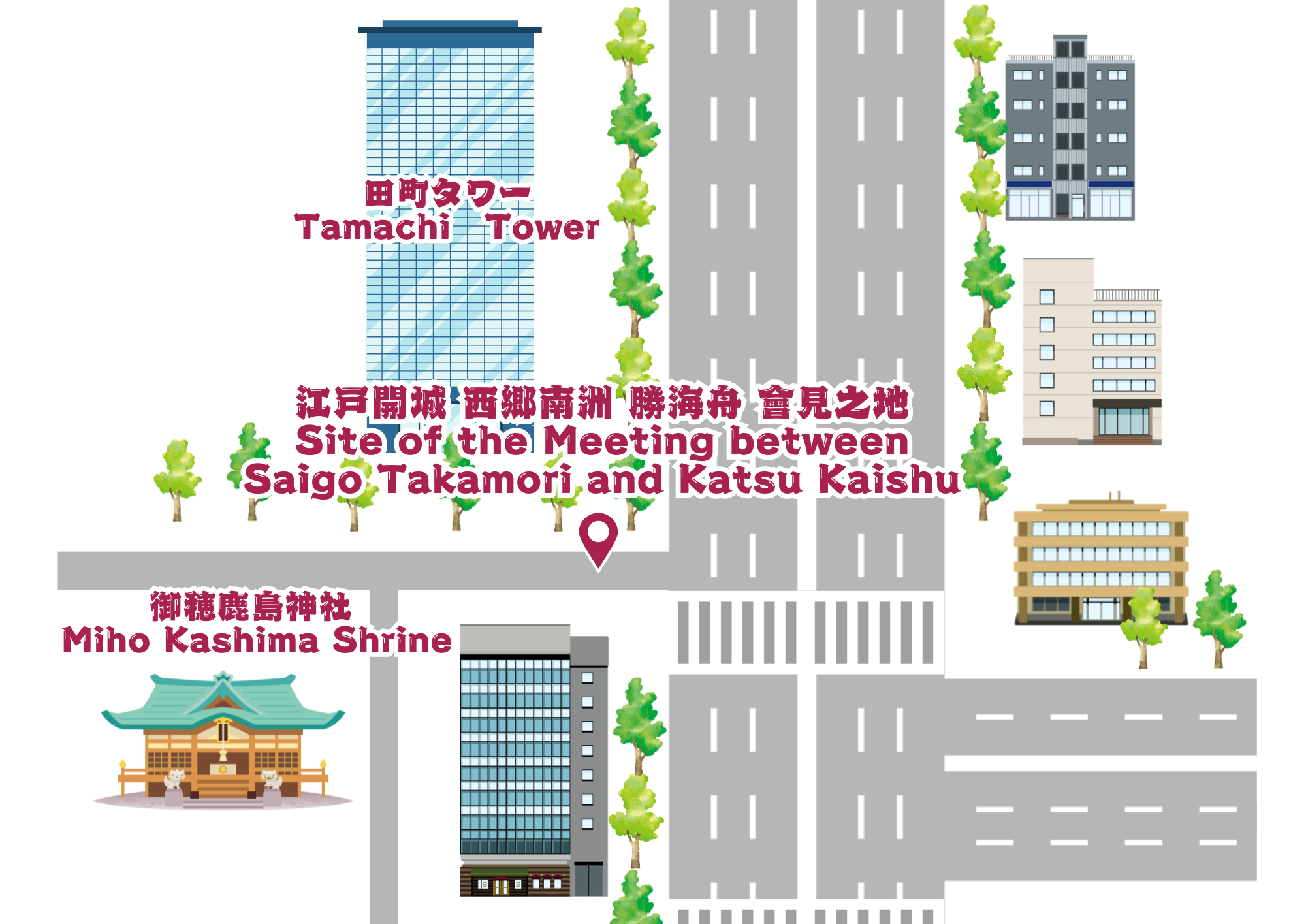
The map icon is a VR 360-degree image!
●For PC users
Touch the icon for the location you want to view →
It’s like you’ve been warped there! You can view in 360°♪
+For VR headset users
Touch the square icon in the upper right →
Enjoy in VR mode!
● For smartphone users
Touch the icon of the location you want to display →
A message will appear on the screen saying “This immersive website requires access to your device’s motion sensors.” Select “Allow” →
A message will appear saying “We’re requesting access to your motion and orientation.” Select “Allow” →
It’ll be like you’ve been transported there! Enjoy a 360° view!
地図のアイコンは、VR360度画像になっています!
●パソコンの方
表示したい場所のアイコンをタッチ→
そこにワープしたかの様に!360°ご覧になれます♪
+VRヘッドセットの方
右上の四角いアイコンをタッチ→VRモードでお楽しみいただけます!
●スマートフォンの方
表示したい場所のアイコンをタッチ→
This immersive website requires access to your device motion sensors.(この没入型ウェブサイトは、デバイスのモーションセンサーへのアクセスが必要です)と画面に出るので、Allow(許可)を選択→
“動作と方向“へのアクセスを求めています を、許可を選択→
そこにワープしたかの様に!360°ご覧になれます♪

↑The QR code above features an AR pop-up effect!
①Turn on your smartphone camera and point it at the QR code above (enable location access in Settings beforehand).
②Select Allow, OK, and Close.
③Something will appear in the space♪
↑上記のQRコードは、ARが飛び出る仕掛けになっています♪
①スマートフォンのカメラを起動、上記QRコードにかざす(事前に設定で位置情報をONにする)
②許可、OK、閉じる を選択
③空間に何かが出ます♪360°見てね!
Site of the Meeting between Saigo Takamori and Katsu Kaishu
Saigo Nanshu (Saigo Takamori) was a vassal of the Satsuma domain (present-day Kagoshima Prefecture), and Katsu Kaishu was born in Edo and a vassal of the shogunate.Both men were from lower-ranking samurai families, but the turbulent times at the end of the Edo period brought these two men together at a meeting that would determine the fate of our country.
The Tokugawa Shogunate’s feudal domain system (in which the Shogun, appointed by the Emperor, led and governed the daimyo, who ruled over various regions (domains)) had brought about a period of peace in Japan since the early 17th century, but cracks in this system became apparent with the arrival of four American warships in 1823.
While Western countries were using military force to pressure Japan to open its borders, criticism of the shogunate, which had forced the country to open up under unfavorable conditions without the Emperor’s permission, grew. Furthermore, inflation caused by unfavorable exchange rates in foreign trade had a direct impact on the lives of ordinary people, destabilizing the political situation. This forced both the shogunate and the various feudal domains to appoint talented people beyond their social status.
The Tokugawa shogunate appointed Katsu Kaishu, a low-ranking samurai from Edo who had studied Dutch and Western studies, to his position, and he rose to become the shogunate’s last Chief of the Army.
In the Satsuma domain, lower-ranking samurai such as Okubo Toshimichi and Saigo Takamori rose to prominence and gained power.
Amid fears of invasion by Western powers, both Kaishu and Takamori worked hard to save Japan from crisis, but Saigo Takamori, who sought to overthrow the shogunate by force, and Katsu Kaishu, a vassal of the shogunate, found themselves facing off as friend and foe.
The 15th Tokugawa Yoshinobu, the last Shogun of the Tokugawa Shogunate, whom Katsu Kaishu served, sensed the movement of the Satsuma and Choshu clans to overthrow the Shogunate by force, and in 1867 (Keio 3), he returned the title of Seii Taishogun to the Emperor in an attempt to avoid civil war. However, the following year (Keio 4), in 1868 (Keio 4), the Satsuma clan’s residence was burned down in Edo while the Shogun was away, leading to a clash between the pro-Shogunate faction and the anti-Shogunate faction, mainly consisting of Satsuma and Choshu, in Toba-Fushimi, south of Kyoto.The anti-shogunate faction, carrying a flag bearing the Imperial family crest, the chrysanthemum crest, won the battle.
Tokugawa Yoshinobu fled to Edo and confined himself at Kan’ei-ji Temple in Ueno to demonstrate his submission. However, as one who had drawn his bow against the Emperor, an order was issued for his pursuit. The “Imperial Army,” with Prince Taruhito of Arisugawa as its commander-in-chief for the eastern campaign, advanced along the Tōkaidō.
Saigo Takamori, who was put in command of the vanguard, received orders to launch a full-scale attack on Edo on March 15th of the same year, and entered the main camp on the 11th.
With the threat of an all-out attack turning the city of Edo into a sea of fire looming, a meeting between Katsu Kaishu and Saigo Takamori took place on March 13th and 14th, at which point it was decided that Edo Castle would be surrendered without bloodshed, thus avoiding a battle that would involve the citizens of Edo.
江戸開城西郷南洲勝海舟會見之地(石碑)
「西郷南洲」(西郷隆盛)は薩摩(現在の鹿児島県)藩の家臣、「勝海舟」は江戸生まれ幕府の家臣で、ともに下級武士出身の2人でしたが、幕末の激動は、この2人を我が国の命運を担う会見の場に臨ませることになります。
17世紀初頭から、日本国内に平和な日々「太平の世」を齎した徳川幕府の幕藩体制(天皇から任ぜられた「征夷大将軍(将軍)」が各地(藩)を支配する「大名」を統率して統治する体制)は、嘉永6年(1823年)4隻の米国軍艦の来航により、その綻びが顕になります。
武力を背景に開国を迫る西欧列国に対し、天皇の許可を得ずに不利な条件で開国を強行した幕府を批判する声が高まり、また、不利な為替レートでの外国交易が齎すインフレは庶民の生活を直撃、政情が不安定化。このことにより、幕府も諸藩も、身分を越えた人材の登用を余儀なくされます。
徳川幕府は蘭学・洋学を学んでいた江戸の下級武士勝海舟を登用、幕府最後の陸軍総裁にまで登り詰めます。
薩摩藩でも、大久保利通・西郷隆盛などの下級武士が台頭して力を蓄えます。
西欧列国による侵略が危惧される中、海舟も隆盛も、我が国の危機を救おうと奔走しますが、武力による倒幕を目指す西郷隆盛と、幕府の家臣である勝海舟は、敵と味方として、対峙することになります。
勝海舟の仕える徳川幕府最後の将軍、第15代徳川慶喜は、薩摩藩・長州藩の武力倒幕の動きを察知し、慶応3年(1867年)天皇に征夷大将軍の地位を返上して内戦を避けようとしますが、翌慶応4年(1868年)、将軍不在の江戸での薩摩藩邸焼き討ち事件を契機に、京都南の鳥羽・伏見において、佐幕派と薩摩・長州を主体とする倒幕派が衝突。天皇家の家紋・菊の御紋の旗を掲げた倒幕派が勝利。
徳川慶喜は江戸に敗走し、上野寛永寺にて謹慎し恭順の意を示しますが、天皇に弓を引いた者として、慶喜追討令が下り、有栖川宮熾仁(たるひと)親王を東征大総督とする「官軍」が東海道を進軍。
先鋒隊の指揮を任された西郷隆盛は、江戸総攻撃を同年3月15日に行う命令を受け、11日、本陣に入ります。
総攻撃が行われれば、江戸の街が火の海になる危機が迫る中、3月13日、14日に勝海舟と西郷隆盛の会見が実現、ここに江戸城無血開城が決まり、江戸の市民を巻き込んだ戦いは回避されました。
コメントを残す