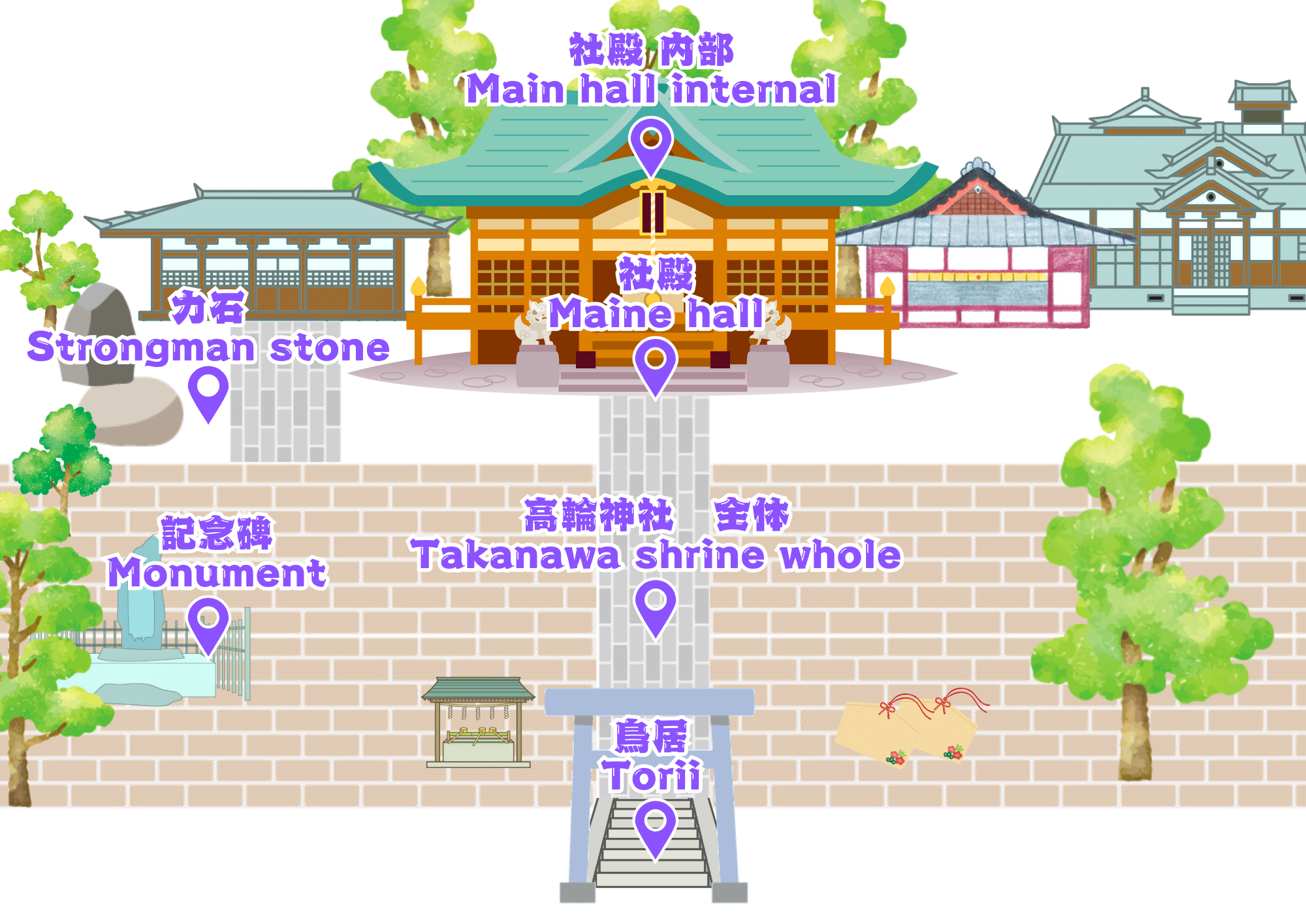
The map icon is a VR 360-degree image!
●For PC users
Touch the icon for the location you want to view →
It’s like you’ve been warped there! You can view in 360°♪
+For VR headset users
Touch the square icon in the upper right →
Enjoy in VR mode!
● For smartphone users
Touch the icon of the location you want to display →
A message will appear on the screen saying “This immersive website requires access to your device’s motion sensors.” Select “Allow” →
A message will appear saying “We’re requesting access to your motion and orientation.” Select “Allow” →
It’ll be like you’ve been transported there! Enjoy a 360° view!
地図のアイコンは、VR360度画像になっています!
●パソコンの方
表示したい場所のアイコンをタッチ→
そこにワープしたかの様に!360°ご覧になれます♪
+VRヘッドセットの方
右上の四角いアイコンをタッチ→VRモードでお楽しみいただけます!
●スマートフォンの方
表示したい場所のアイコンをタッチ→
This immersive website requires access to your device motion sensors.(この没入型ウェブサイトは、デバイスのモーションセンサーへのアクセスが必要です)と画面に出るので、Allow(許可)を選択→
“動作と方向“へのアクセスを求めています を、許可を選択→
そこにワープしたかの様に!360°ご覧になれます♪
Takanawa shrine
The Edo Meisho Zue, published during the Tenpo era (1834-1836), depicts the Takanawa seaside landscape along with buildings labeled “Inari Shrine,” “Taishido,” and “Koshindo,” and the following is passed down:
・It was founded as an Inari shrine during the Meio era (1492-1501), which falls under the Muromachi period (1338-1573) in Japan’s historical division.
・During the Meireki era (1655-1658) in the Edo period, the Taishido Hall was built to house a statue of Prince Shotoku, said to have been made by Prince Shotoku himself. Prince Shotoku was the second son of the 31st Emperor Yomei and was entrusted with national affairs by his aunt, the 33rd Empress Suiko.
・Around the same time, the Koshin-do Hall was built to house the Shomen Kongo statue, said to have been made by Gohan Sozu, who is said to have prayed for the end of an epidemic at the Koshin-do Hall of Shitennoji Temple in 701.
・In a major fire in 1845, known as the “Aoyama Fire,” the shrine buildings, treasures, ancient documents, and other items were destroyed.
・Later, the main hall was rebuilt in the style of a storehouse, and in 1877, Hachiman Shrine, which was located near present-day Takanawa 3-chome, was enshrined there.
・The “Taishido” of the Edo period corresponds to the current “Taishigu”, and the “Koshindo” corresponds to the current “Sarutahiko Shrine”.
高輪神社
天保年間(1834年〜1836年)に刊行された「江戸名所図会」に、高輪海辺の景観とともに、「稲荷社」「太子堂」「庚申堂」と記された堂宇が描かれており、以下が伝わっています。
・日本の時代区分で「室町時代」(1338年〜1573年)と呼ばれる時代に属する、明応年間(1492-1501年)に稲荷神社として創建。
・江戸時代である明暦年間(1655年〜1658年)には、第31代用明天皇の第二皇子で、叔母に当たる第33代推古天皇から国政を任された聖徳太子が自作したと伝わる聖徳太子像を祀る太子堂を建立。
・同じ頃、大宝元年(701年)に四天王寺庚申堂で疫病退散を祈ったと云われる豪範僧都の作と伝わる青面金剛像を祀る、庚申堂を建立。
・「青山火事」と呼ばれる、弘化2年(1845年)の大火で、社殿、社宝、古文書などを焼失。
・その後、土蔵造の本殿を再建し、明治10年(1877年)現在の高輪3丁目付近に鎮座していた八幡神社を合祀。
・江戸時代の「太子堂」に該当するのは現在の「太子宮」、庚申堂に該当するのは現在の「猿田彦神社」
コメントを残す